recent Findings
Consistent with past reports, the threat of hostage taking continues to be from nation-states. Over the last 22 years, there has been a significant increase in reports of Americans being unjustly held overseas, driven primarily by a rise in wrongful detentions. Between 2004 and 2014, at least 54 Americans were wrongfully detained; from 2015 to 2025, that number rose to 142— representing a 163% increase.
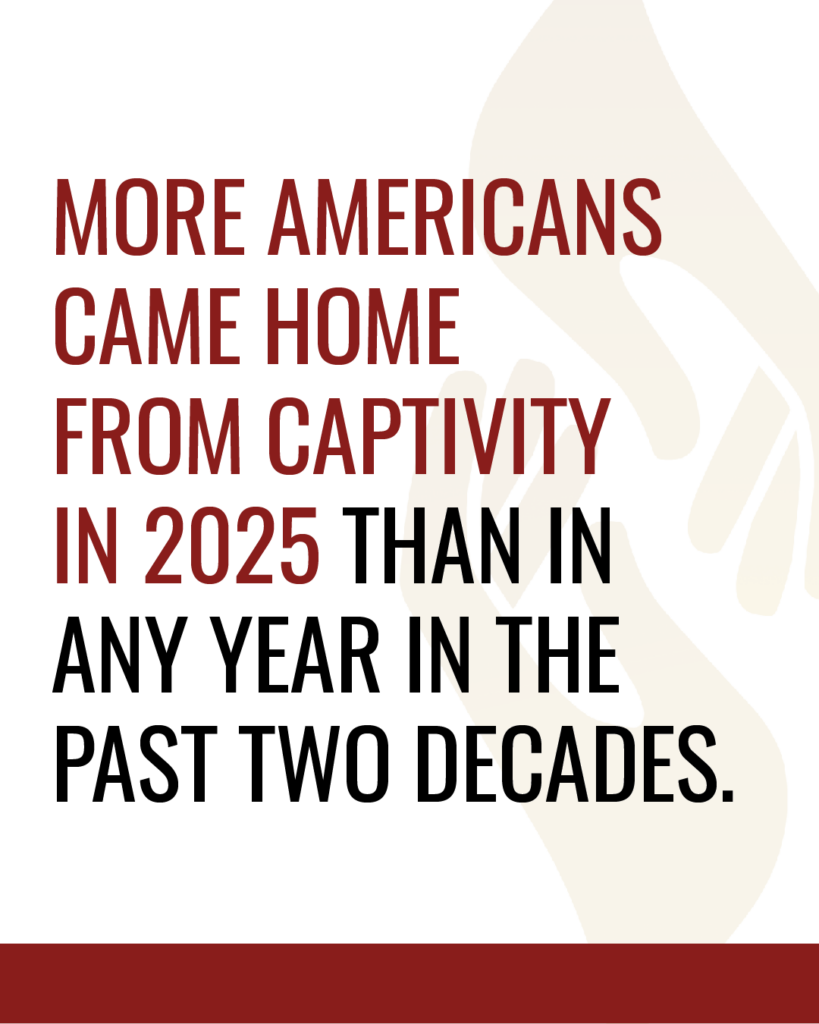
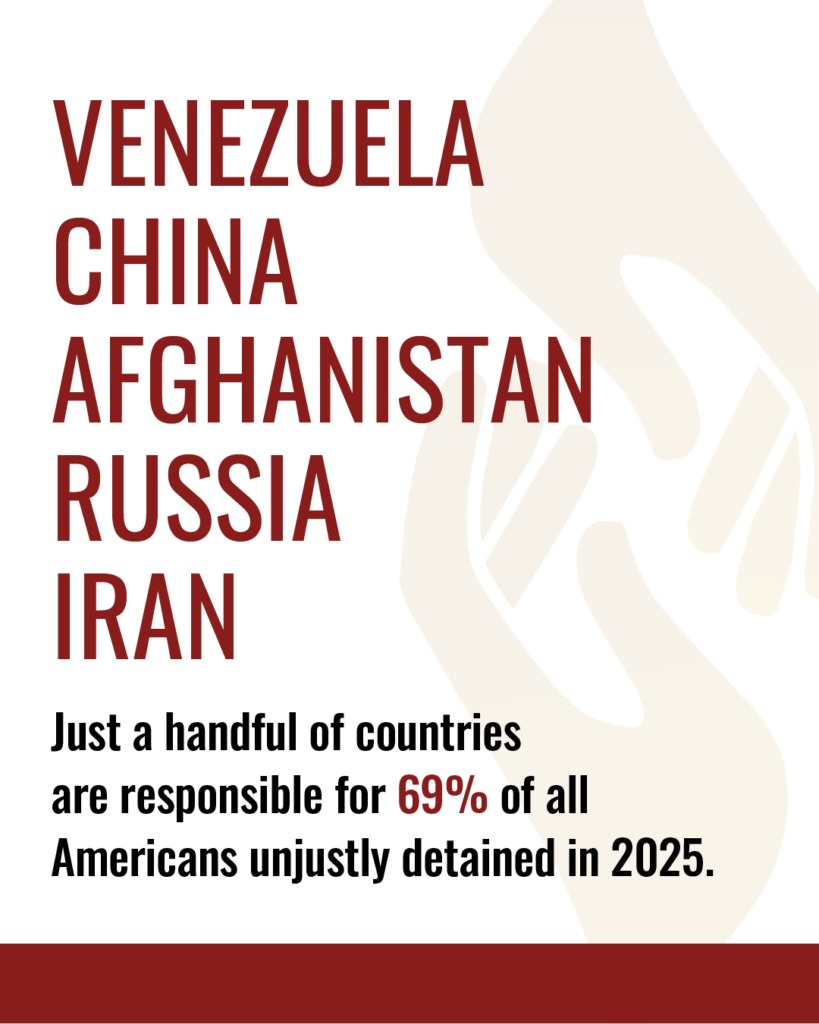
Despite the threat from nation-states, Americans are coming home. 2025, in particular, was a strong year for the release of Americans unjustly held overseas. Across the full timeframe of interest (2004-2025), 2025 stands out as the year with the highest number of reported returns. However, even as Americans were coming home from countries such as Afghanistan and Venezuela, more Americans continued to be taken in those same captor countries. Furthermore, periods of stagnation persist, particularly for longstanding cases. These observations carry implications for bringing Americans home, as well as prevention and deterrence efforts.
EXECUTIVE SUMMARY
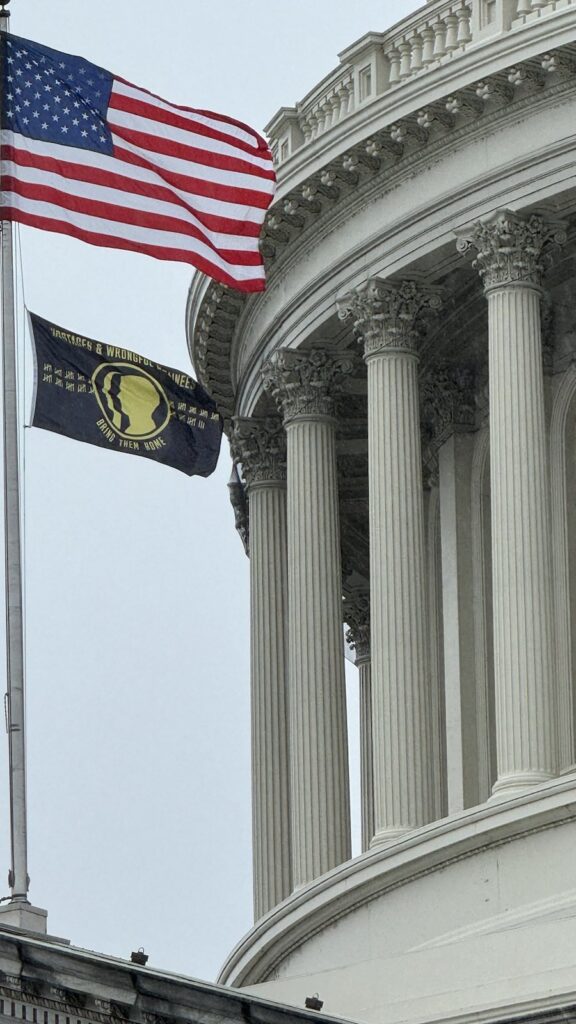
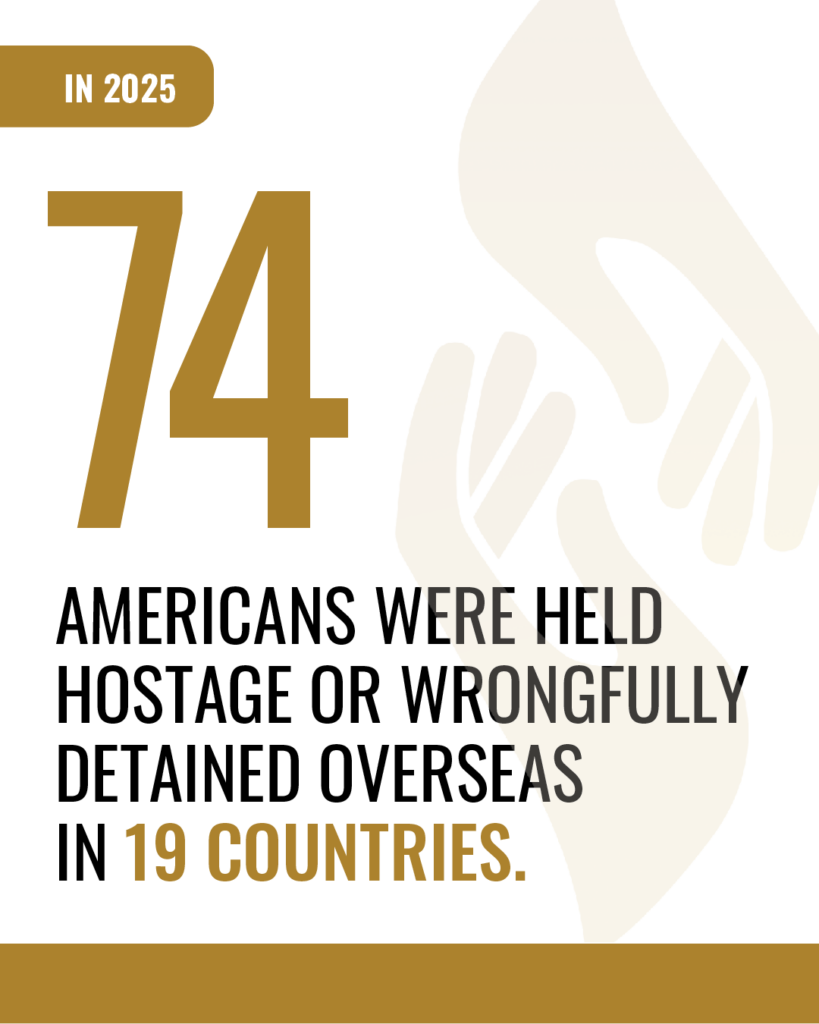
At least 74 Americans were held hostage (8) or wrongfully detained (66) in 19 countries at some point in 2025. Consistent with past years, wrongful detention continues to account for the majority of Americans unjustly held in captivity for 2025 (89%).
The Foley Foundation identified 14 new cases of hostage taking (1) and wrongful detention (13) in 2025, representing a 48% reduction from the previous year. Additionally, 34 Americans (3 hostages, 31 wrongful detainees) came home in 2025, a 22- year high. The vast majority of these releases were achieved through a prisoner exchange (15) or diplomatic engagement (10). There were no recorded deaths of Americans in captivity in 2025.
The findings of this research indicate that the primary threat continues to come from nation-states wrongfully detaining Americans. Americans continued to be taken by captor countries, including in cases where the U.S. government issued strong warnings (e.g., Iran, Venezuela).
More focus should be directed to prevention messaging, both by the U.S. government and the private sector. Furthermore, as the U.S. hostage enterprise evolves, so should deterrence options. Given that President Donald Trump signed the Executive Order Strengthening Efforts to Protect U.S. Nationals from Wrongful Detention Abroad, Secretary of State Marco Rubio should take advantage of this tool and designate Afghanistan a state sponsor of wrongful detention, especially as the Taliban continues to hold Americans.
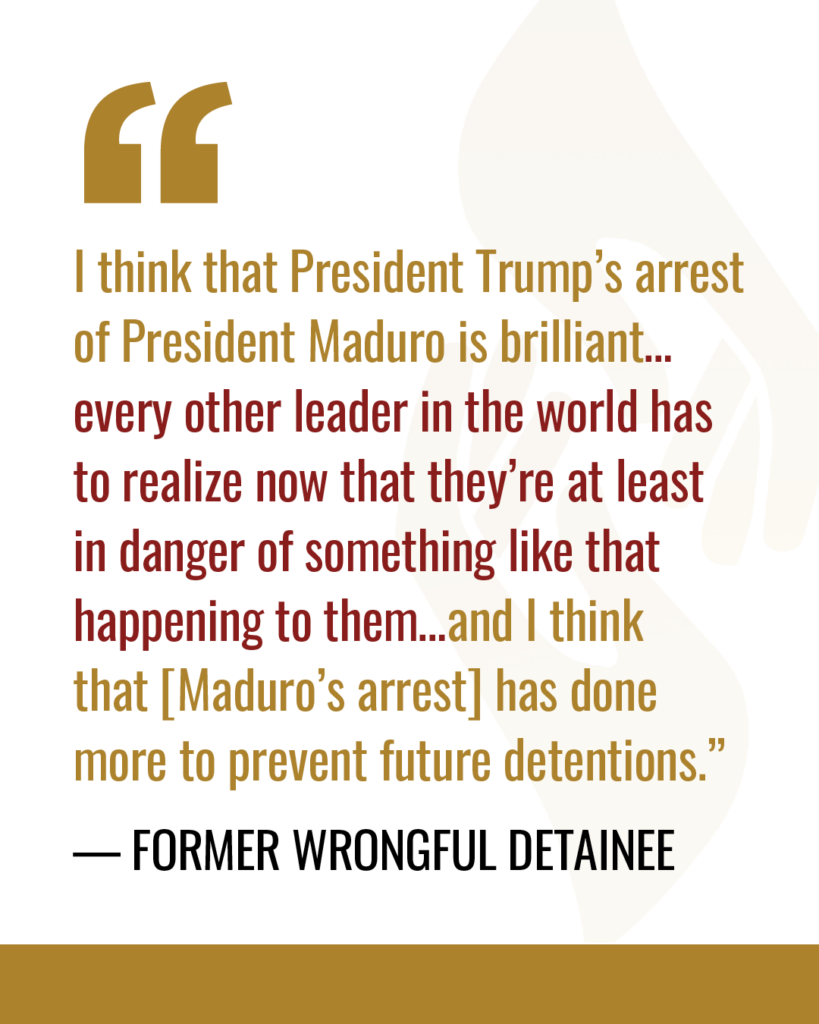
Finally, the U.S. government should formally charge deposed Venezuelan President Nicolás Maduro with kidnapping. Criminal charges against the ousted leader of a captor state would be the most powerful message the U.S. could send against nation-states engaged in this crime and would deliver justice and accountability for survivors and their families.
A NOTE FROM our PRESIDENT AND FOUNDER
WE MUST HAVE THE MORAL COURAGE TO STOP THE TARGETING OF AMERICANS FOR USE BY CAPTORS AS POLITICAL PAWNS
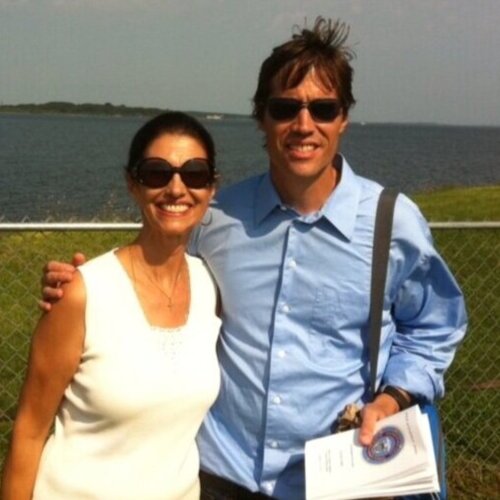
Dear fellow Americans,
Thank you for your interest in the Foley Foundation’s 2025 Bringing Americans Home: Hostage and Wrongful Detainee Landscape Report. Our talented researcher, Elizabeth Richards, has skillfully summarized 2025 U.S. hostage and wrongful detainee data for all of us who are concerned about U.S. nationals held captive far from home. We are grateful to our partner, Global Reach, and to you – our generous supporters – for making this work possible.
The intentional targeting of our citizens and legal permanent residents abroad has become a national security crisis for those traveling or residing overseas for work, education, or leisure.
We applaud President Trump and his administration for prioritizing the release of Americans held captive abroad, a commitment that has resulted in freedom for an extraordinary 83 U.S. nationals in the past year.
The James W. Foley Legacy Foundation is grateful for our country’s progress and leadership on this nonpartisan issue.
We are also encouraged that the FY2026 National Defense Authorization Act mandated a public assessment of the U.S. Hostage Enterprise. To honor the memories of James Foley, Steven Sotloff, Peter Kassig, Kayla Mueller, Warren Weinstein, and Robert Levinson—who were killed or perished in captivity—we must never again abandon Americans taken hostage.
As a nation, we must prioritize their freedom while correcting the inefficiencies that prolong unjust captivity, keep anxious families in the dark, and increase post-release trauma. And we must have the moral courage to stop the targeting of Americans for use by captors as political pawns.
Thank you for standing with us in this vital mission. Together, we will continue to Bring Them Home!


Diane Foley
President & Founder
DOWNLOAD REPORTS
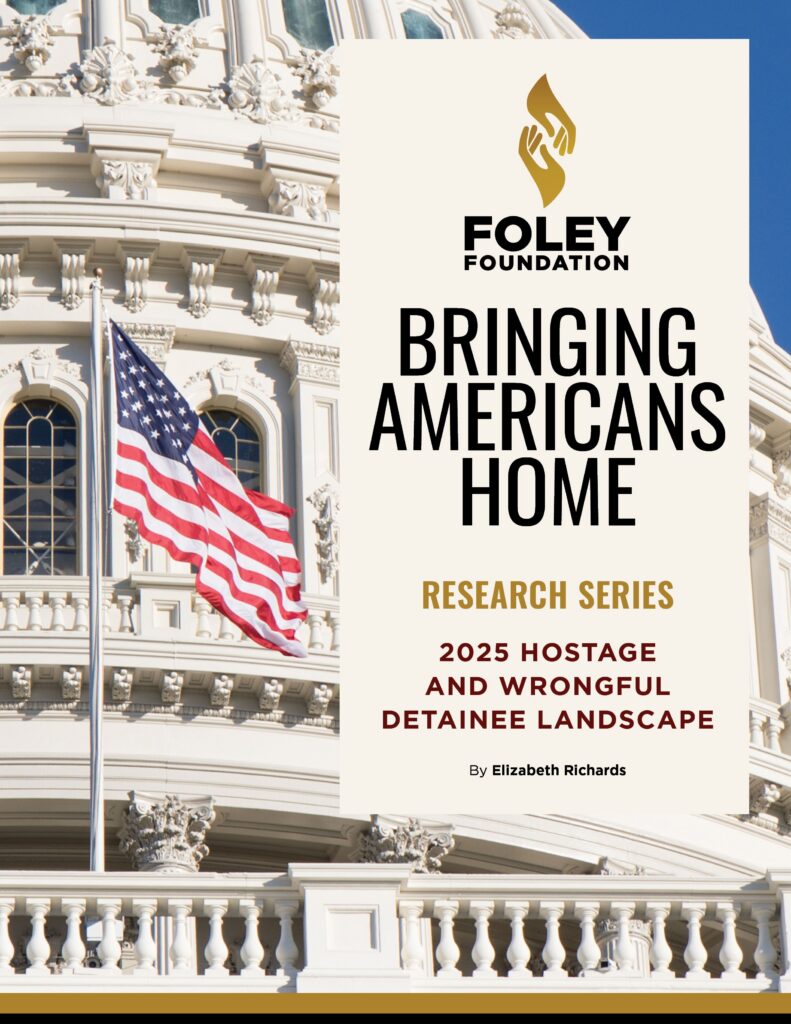
Latest Report
Bringing Americans Home
Bringing Americans Home: 2025 Qualitative Report
This report—the latest in the Bringing Americans Home research series— draws on 35 interviews with families of hostages and wrongful detainees, U.S. government officials, and subject matter experts. It identifies persistent structural and policy challenges that delay the return of Americans held abroad and hinder efforts to deter future hostage-taking and wrongful detentions. The findings reflect the final year of the Biden administration and reflect seven years of independent, nonpartisan research conducted by the James W. Foley Legacy Foundation.
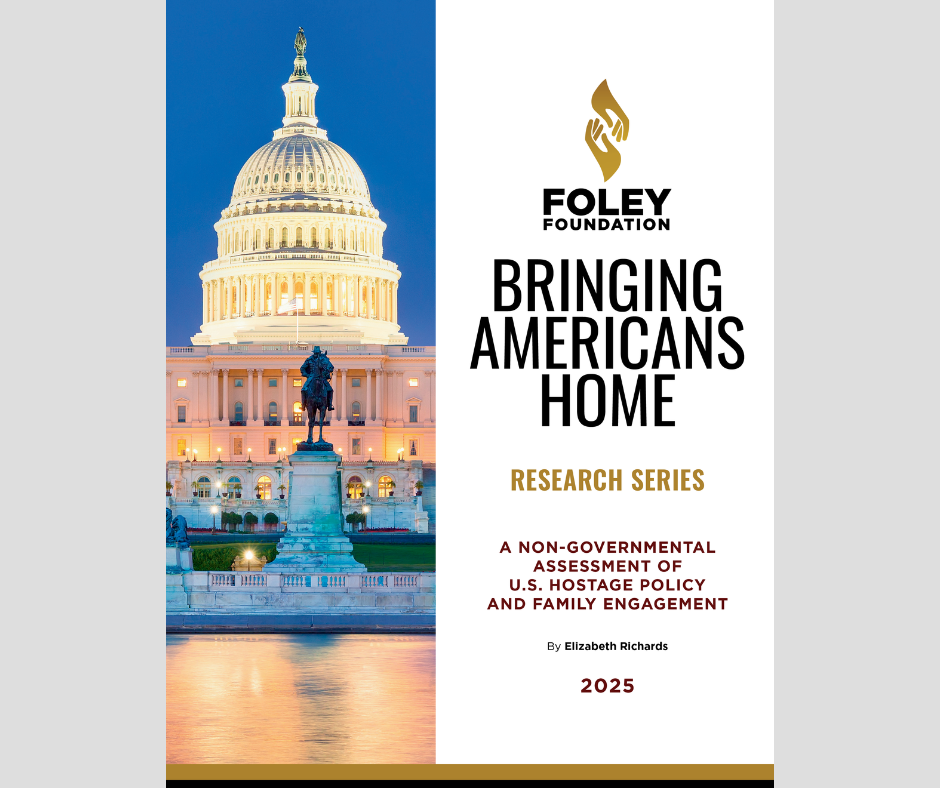
Bringing Americans Home: 2024 Landscape Report
This paper describes the hostage and wrongful detention landscape for 2024 using descriptive and inferential statistics.
It explores the problem in terms of the known number of Americans held, the number of new cases during the past calendar year, number of releases, and number of deaths. This paper is not an assessment of the effectiveness of the U.S. hostage enterprise or U.S. hostage policy. The analysis presented here cannot be used to draw inferences about the efficacy of the U.S. hostage enterprise or U.S. hostage policy as both are outside of
the scope of this paper.
Bringing Americans Home: 2024
This report, conducted by the Foley Foundation, builds upon the Foundation’s previous assessments of the effectiveness of the 2015 U.S. Hostage Policy Review, the implementation of Presidential Policy Directive 30, Executive Order 13698, Executive Order 14078, and the Robert Levinson Hostage Recovery and Hostage-Taking Accountability Act. It integrates an examination of the landscape of hostage-takings and wrongful detentions of U.S. nationals using the Foley Foundation’s database of cases with a survey of family members and other stakeholders connected to 27 cases of hostages and wrongful detainees. Through confidential interviews with 62 participants, this report represents the perspectives of these U.S. hostages, wrongfully held detainees, their families, representatives, and advocates.
Bringing Americans Home: 2023
This report, conducted by the James W. Foley Legacy Foundation (JWFLF), consists of two sections.. The first section, “U.S. National Wrongful Detention and Hostage-Taking Landscape, 2022-2023,” used two JWFLF datasets containing information on 422 U.S. nationals held hostage or wrongfully detained abroad from January 1, 2001, through July 31, 2023, to discuss trends, releases, and detailed outcomes. The second section, “Wrongful Detainee and Hostage Perspectives,” was written by Matthew Heath and Jeffery Woodke, two former captives. Both perspectives provide ways to rethink U.S. strategy on wrongful detentions and hostage-takings. Their stories help to shed light on the toll of captivities and the importance of securing the freedom of all Americans.
Bringing Americans Home: 2022
From 2019–2021, the James W. Foley Legacy Foundation published a yearly assessment of the efficacy of the 2015 U.S. Hostage Policy Review and the implementation of PPD-30 and EO 13698. This report, an extension of those assessments, continues to examine how the U.S. government creates and implements policy in support of U.S. nationals taken hostage or wrongfully detained abroad as well as their families. Most importantly, this report seeks to better understand whether the new structures these policy changes have created help bring Americans home and offers nine recommendations to improve the government’s hostage enterprise.
Bringing Americans Home: 2021
This report, conducted by the James W. Foley Legacy Foundation (JWFLF), is a continuation of JWFLF’s assessments of the efficacy of the 2015 U.S. Hostage Policy Review and the implementation of Presidential Policy Directive 30 and Executive Order 13698. This study seeks to convey the perspectives of U.S. hostages, unlawfully or wrongfully held detainees, their family members, representatives, advocates, former senior military officials, and current and former U.S. officials. It, however, does not represent the perspectives of all former hostages, detainees, and their families, but only presents the perspectives of those who participated in this study
Bringing Americans Home: 2020
This report, conducted by the James W. Foley Legacy Foundation (JWFLF), is a continuation of JWFLF’s initial assessment of the efficacy of the 2015 U.S. Hostage Policy Review and the implementation of PPD-30 and EO 13698. This study was conducted from the perspective of American hostages, wrongfully held detainees, and their family members and representatives. It does not represent the perspective of all former hostages, detainees, and their families, but only presents the perspectives of those who participated in this study.
Bringing Americans Home: 2019
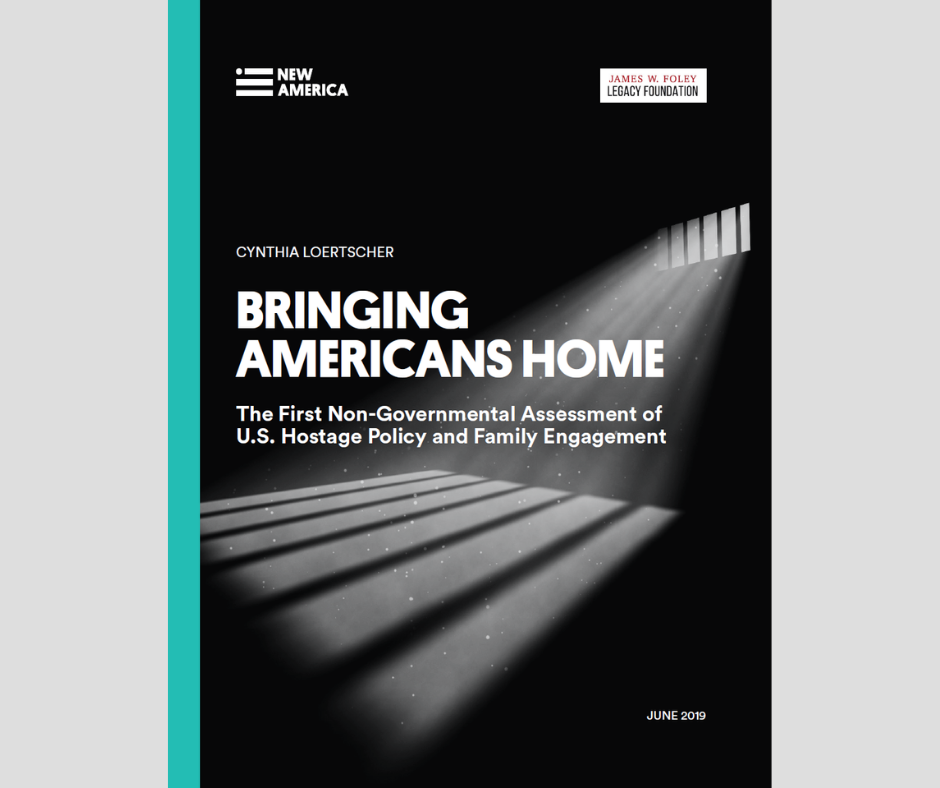
This assessment, conducted by the James W. Foley Legacy Foundation, (JWFLF) is the first non-governmental review of the efficacy of the 2015 U.S. Hostage Policy Review and the implementation of Presidential Policy Directive 30 (PPD-30) and Executive Order 13698 (EO 13698) concerning hostage recovery activities. This study was conducted from the perspective of former American hostages, family members of current and former U.S. hostages, and others detained unlawfully or wrongfully by a foreign government. This study does not represent the perspective of all former hostages, detainees, and their families, but only presents the perspectives of those who participated in this study.